
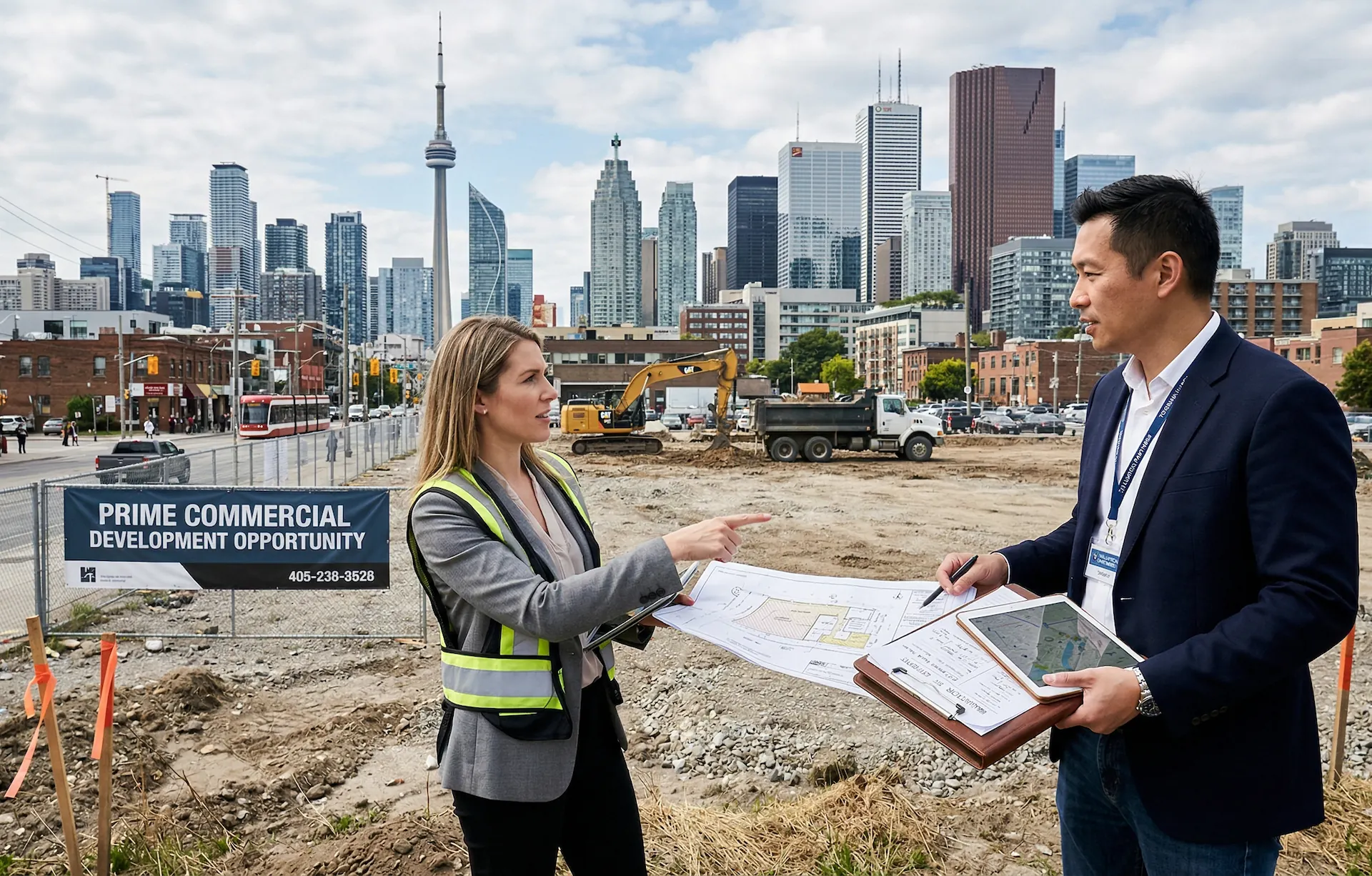

Question: How Do You Value Commercial Development Land?
Answer: The primary method for valuing commercial development land is the residual approach: estimate the completed project’s value based on permitted zoning, then subtract all development costs and profit. The remainder is the land’s value. Comparing recent sales of similar parcels also provides a benchmark.
Methods for Valuing Commercial Development Land
Raw, undeveloped land holds immense potential. For investors and developers, it represents an opportunity to create value from the ground up. But before any plans are drawn or soil is turned, a fundamental question must be answered. The process of figuring out to value commercial development land is critical for making sound investment decisions. This valuation determines a fair purchase price, secures financing, and ultimately shapes the profitability of a future project. It is a detailed analysis, not a simple guess based on acreage.
The value of a parcel of land is not inherent in the dirt itself. Its worth is directly tied to its potential. What can be built on it? How profitable will that development be? Answering these questions involves more than just looking at nearby property listings. It requires a deep dive into municipal planning documents, an understanding of market demand, and a thorough analysis of development costs. Different valuation methods provide different perspectives on a property’s worth.
Understanding these techniques provides the foundation you need to assess opportunities and appreciate the true potential locked within a piece of vacant land. Grasping how to value commercial development land is the first step toward a successful project.
The Principle of Highest and Best Use
Before any valuation method can be applied, you must first determine the property’s “highest and best use.” This foundational concept in real estate appraisal refers to the most profitable, legal, and physically possible use of a piece of land. It is the use that would result in the highest possible value for the site. This principle is the lens through which all other data is viewed, as the land’s potential directly dictates its worth.
To qualify as the highest and best use, a potential development must meet four specific criteria. First, it must be legally permissible, meaning it aligns with current zoning bylaws and official plan designations. Second, it must be physically possible, considering the site’s size, shape, topography, and soil conditions. Third, it must be financially feasible, meaning the completed project would be worth more than the cost to build it. Finally, it must be maximally productive, generating the highest return among all feasible options.
For example, a vacant lot on a busy arterial road might be legally zoned for either a small single-storey office or a three-storey mixed-use building with retail on the ground floor and apartments above. While both are possible, a market analysis might show strong demand for rental units and commercial space. In this case, the mixed-use building would likely be the highest and best use because it generates a greater return, making the land more valuable to a developer with that vision. Accurately determining this potential is a key step in how to value commercial development land.
Click the link to get more information about Blue Kitchen Refacing
Related Article: What Is a Commercial Master Lease Agreement?
Related Article: What Is a Commercial Mixed-Use Property Under Canadian Law?
The Income Approach: Projecting Future Revenue
While the Direct Comparison Approach looks at past sales, the Income Approach looks to the future. This method, often called the “Residual Land Value Method” or “Development Approach,” is particularly useful for developers. It values the land based on its potential to generate income once a project is built and operational. This technique essentially works backward to determine what a developer could afford to pay for the land and still achieve their desired profit margin.
The process begins with a hypothetical development that represents the land’s highest and best use. The appraiser or developer first estimates the total market value of this completed project. For example, they might project the value of a newly constructed retail plaza based on its potential rental income. From this final value, they subtract all associated development costs. These “soft” and “hard” costs include construction materials and labour, architectural fees, engineering reports, permit fees, legal expenses, and financing costs.
After deducting all costs, an amount for the developer’s profit is also subtracted. The amount that remains is the “residual value,” which represents the maximum price a developer could pay for the raw land. This method is complex and relies heavily on accurate projections of future revenue and precise cost estimates. It is a critical tool for understanding how to value commercial development land from an investment standpoint.
The Cost Approach: A Limited but Useful Tool
A third valuation method is the Cost Approach. While essential for valuing improved properties (those with buildings on them), its application for vacant commercial land is more limited. The basic principle is that a buyer would not pay more for a property than the cost to acquire a similar site and construct any improvements. When dealing with just land, the focus is on the cost of acquiring an equivalent substitute parcel.
In practice, this often circles back to the Direct Comparison Approach, as the “cost” of a substitute site is determined by what similar sites are selling for. For this reason, the Cost Approach is rarely the primary method used to determine how you value commercial development land. It does not effectively capture the land’s development potential or income-generating capacity, which are the main drivers of value for commercial real estate investors and developers.
However, the Cost Approach can be useful in specific situations. It may be used for properties with unique or specialized uses, such as land intended for a new school, a public park, or a utility substation. In these cases, there may be few or no comparable sales, and the land does not have a traditional income-generating purpose. The Cost Approach can provide a baseline value, but it almost always requires support from other valuation techniques to present a complete and accurate picture of the property’s market worth.
Critical Factors That Influence Land Valuation
Beyond the formal valuation methods, several key factors have a profound impact on the final value of a piece of commercial development land. These characteristics determine what can be built, how much it will cost, and how desirable the final project will be. A thorough analysis of these elements is a non-negotiable part of the valuation process. An investor must look beyond the asking price and investigate these underlying drivers of value.
Understanding these variables is central to the process of how to value commercial development land. Each factor can significantly increase or decrease a property’s worth, and overlooking even one can lead to a costly mistake. A comprehensive due diligence process is required to verify this information.
-
Zoning and Official Plan Designations
Municipal zoning bylaws and official plans are the rulebooks for development. They dictate what uses are permitted (e.g., retail, industrial, residential), maximum building heights, density limits, and setback requirements. Land with flexible, “as-of-right” zoning that allows for a profitable development is far more valuable than land that requires a lengthy and uncertain rezoning process. -
Site Servicing
The availability of municipal services is a major cost factor. Is the land connected to water, sanitary and storm sewers, hydro, and natural gas? If not, the cost to extend these services to the property line can run into the hundreds of thousands of dollars or more. This expense directly reduces the amount a developer is willing to pay for the land itself. -
Location and Accessibility
The old adage “location, location, location” holds true. Proximity to major highways, public transit, and established population centres drives value. For retail or office developments, visibility from busy roads is paramount. Corner lots, for example, often command a premium due to their superior exposure and access. -
Physical Characteristics
The land’s physical state matters greatly. A flat, rectangular, well-drained site is ideal and cheaper to develop. Land with steep slopes, poor soil conditions, or an irregular shape can dramatically increase site preparation and construction costs, thereby lowering its value. -
Environmental Condition
The environmental state of a property is a critical point of due diligence. A history of industrial use may suggest potential soil or groundwater contamination. A Phase I Environmental Site Assessment is standard practice. If contamination is found, the cost of remediation can be substantial and must be factored into the land’s value.
The Role of Professional Appraisals and Due Diligence
While understanding the theory is helpful, a formal, professional appraisal is often a requirement for financing and a wise investment for any serious buyer. A certified appraiser provides an independent, unbiased opinion of market value. They use the established methods discussed—Direct Comparison, Income, and Cost—to prepare a detailed report that can stand up to scrutiny from lenders, partners, and other stakeholders. Their analysis forms the backbone of a credible valuation.
However, an appraisal is just one piece of the puzzle. The buyer’s due diligence process is equally important. This is the investigatory period where a potential purchaser verifies all the assumptions about a property. It involves confirming the zoning with the local planning department, obtaining cost estimates for site servicing from utility providers, and commissioning technical studies, such as a geotechnical report to assess soil stability or an environmental assessment to check for contamination.
The findings from due diligence can significantly alter a property’s perceived value. A clean environmental report and favourable soil tests will support the appraised value. Conversely, discovering that a watermain extension is required or that the soil has a low bearing capacity can trigger a renegotiation of the purchase price. This thorough investigation ensures that the final price paid reflects the land’s true condition and potential, solidifying the importance of a detailed approach for how to value commercial development land.
Bringing It All Together
Determining the value of commercial development land is a multi-faceted process that blends art and science. It is far more than a simple price-per-acre calculation. It requires a forward-looking perspective grounded in solid market data and a clear understanding of development fundamentals. As we have seen, the core question of how do you value commercial development land has no single, simple answer. Instead, its value is revealed through a convergence of different analytical methods.
The process starts with identifying the highest and best use, which sets the stage for all further analysis. From there, the Direct Comparison Approach provides a market-based reality check by looking at what similar properties have sold for. The Income Approach offers an investor’s perspective, calculating the land’s worth based on the profitability of a future project. Each method provides a different piece of the valuation puzzle, and a skilled professional knows how to weigh and reconcile these different figures.
A property’s value is influenced heavily by external factors like zoning, servicing, and physical condition. A successful land transaction depends on a thorough due diligence process to uncover and quantify these variables. Engaging with a real estate professional who specializes in commercial land is essential. They can provide the market knowledge and professional network needed to navigate the valuation process, ensuring you make an informed decision based on a comprehensive understanding of the property’s true worth.


