
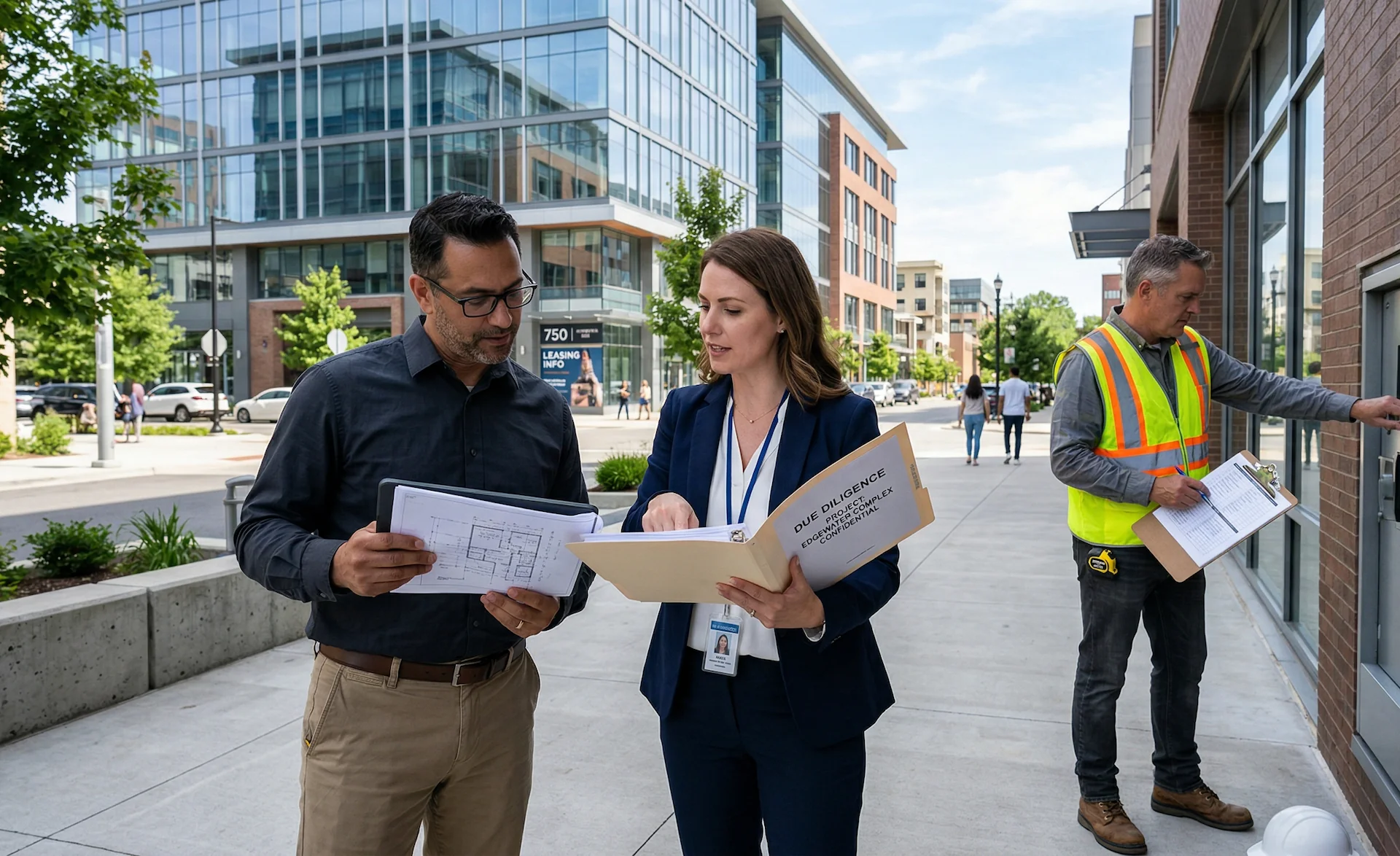

Question: How Do You Conduct Commercial Real Estate Due Diligence?
Answer: Commercial real estate due diligence is a comprehensive investigation of a property’s financial records, physical condition via inspections and environmental assessments, and legal standing, including title searches and zoning compliance. This critical process identifies potential risks and liabilities before purchase, ensuring a sound investment.
Commercial Property Due Diligence
Investing in commercial real estate presents a significant opportunity for growth, but it also carries substantial risk. The key to mitigating this risk lies in a thorough investigation process. Understanding to conduct commercial real estate due diligence is the most important step you will take after your offer is accepted. This period, often called the conditional or investigation period, is your chance to verify every claim made by the seller and uncover any hidden issues with the property. A well-executed due diligence process protects your investment and ensures the property aligns with your financial goals.
Many investors focus heavily on the purchase price but can underestimate the importance of a detailed property review. This review goes far beyond a simple walk-through. It involves a systematic examination of financial records, physical structures, legal documents, and environmental conditions. The information you gather helps you confirm the property’s value, forecast future performance, and decide whether to proceed with the purchase, renegotiate the terms, or walk away. Failing to conduct commercial real estate due diligence properly can lead to costly surprises, from unexpected repair bills to legal disputes and zoning violations that limit your use of the property.
Assembling Your Professional Due Diligence Team
You cannot effectively conduct commercial real estate due diligence alone. Success requires a team of qualified professionals, each bringing specialized expertise to the investigation. Your commercial real estate agent is your primary coordinator, helping you manage the process and connect with other experts. The first specialist you will need is a real estate lawyer who focuses on commercial transactions. This lawyer will handle the title search, review all legal documents, and identify any easements, liens, or encumbrances that could affect your ownership rights.
Next, you will need an accountant with experience in commercial properties. They will analyse the seller’s financial statements, including rent rolls, operating expense reports, and tax returns. Their analysis helps verify the property’s net operating income (NOI), a key metric for determining value and profitability. The accountant can spot inconsistencies in the financial records and help you create realistic projections for future cash flow. Their input is crucial for confirming that the investment makes financial sense.
You will also need a team of inspectors. This includes a building inspector or engineer to assess the structural integrity, roof, HVAC systems, plumbing, and electrical components. Depending on the property type, you might also need specialists like a roofing contractor or an elevator technician. Finally, an environmental consultant is essential for conducting an Environmental Site Assessment (ESA). This professional identifies potential contamination from past or current uses of the property and its neighbours, which is a critical step in managing liability. Your team works together to give you a complete picture of the asset.
Click here for more information on commercial development realtors
Related Article: How Do Canadian Commercial Mortgage Terms Differ From Residential?
Related Article: How Do Commercial Tenant Improvement Allowances Work?
Physical Property Inspection and Condition Assessment
A thorough physical inspection reveals the true condition of the building and its systems. While you might spot cosmetic issues during a walk-through, a professional inspector provides a detailed assessment of critical components. This inspection should cover the entire property, from the foundation to the roof. The inspector will evaluate the building’s structure, the condition of the exterior walls and windows, and the state of the parking lot and any landscaping. Their final report will detail their findings, including estimated costs for any necessary repairs or replacements.
The inspection must also cover the building’s major mechanical systems. This includes the heating, ventilation, and air conditioning (HVAC) units, the electrical systems, and the plumbing. An inspector will check the age and service history of these systems to predict their remaining useful life. An aging HVAC system or an outdated electrical panel can represent a significant capital expenditure in the near future. Understanding these potential costs is a vital part of your financial modeling and negotiation strategy. This part of the commercial real estate due diligence process prevents you from inheriting expensive problems.
Beyond the general inspection, consider hiring specialists for critical systems. A commercial roofing expert can provide a more detailed analysis of the roof’s condition than a general inspector might. If the building has elevators, a qualified elevator consultant should assess their condition and compliance with safety standards. For industrial properties, you may need an engineer to inspect specialized equipment or loading docks. The goal is to leave no stone unturned and to create a comprehensive list of all deferred maintenance and future capital needs.
Legal and Title Review: Uncovering Encumbrances
The legal review is a non-negotiable part of how you conduct commercial real estate due diligence. Your real estate lawyer leads this effort, starting with a comprehensive title search. This search confirms that the seller has a clear and marketable title to the property. It also uncovers any legal claims or restrictions registered against the property, known as encumbrances. These can include mortgages, liens from unpaid contractors or taxes, court judgments, and easements that grant others the right to use a portion of your land.
Your lawyer will carefully examine every document found during the title search. For example, an undiscovered utility easement could prevent you from building an extension where you planned. A restrictive covenant might limit the type of business you can operate on the property. Identifying these issues during the due diligence period gives you the opportunity to address them with the seller. In some cases, the seller can resolve the issue before closing; in others, you may need to decide if you can live with the restriction.
Another critical step is to obtain a new survey of the property or review an existing one. A survey, or Real Property Report, confirms the property’s legal boundaries and shows the location of all buildings, fences, and other improvements. It can reveal encroachments, where a neighbouring structure is built on your property, or where your building extends over the property line. Resolving boundary issues after you purchase a property can be difficult and expensive, making this review essential. This legal investigation protects you from future disputes and ownership challenges.
Zoning, Permits, and Municipal Compliance
Confirming that the property complies with all municipal by-laws is a critical part of the due diligence process. Your investigation starts with a review of the local zoning by-law to ensure your intended use for the property is permitted. Zoning regulations dictate everything from the types of businesses allowed to rules on parking, building height, setbacks, and signage. You cannot assume that the current owner’s use is legally compliant or that your planned use will be automatically approved. Your lawyer or a planning consultant can help you interpret these complex regulations.
Next, you must verify the property’s compliance history with the municipality. This involves requesting records from the local building and planning departments. You need to confirm that all existing structures were built with the proper permits and that all inspections were completed and passed. Look for any open permits, work orders, or notices of violation issued against the property. Unresolved compliance issues can become your responsibility after closing, potentially leading to fines or orders to remove non-compliant structures. This step in your commercial real estate due diligence shields you from legacy problems.
It is also wise to understand the future development plans for the surrounding neighbourhood. Review the municipality’s Official Plan, which outlines the long-term vision for land use and growth. Are there major infrastructure projects planned, like a new transit line or highway interchange, that could benefit your property? Conversely, are there plans for a new development next door that could create competition or disrupt your business? Understanding the broader context helps you assess the long-term potential and risks of your investment.
Environmental Site Assessments: Identifying Contamination Risks
Environmental contamination is one of the most significant liabilities associated with commercial real estate. As the property owner, you could be held responsible for the cost of cleanup, even if you did not cause the contamination. This is why conducting a Phase I Environmental Site Assessment (ESA) is an essential component when you conduct commercial real estate due diligence. A qualified environmental consultant performs the Phase I ESA to identify any potential or existing environmental contamination liabilities.
The Phase I ESA is a non-intrusive investigation. The consultant will review historical records, such as aerial photographs, property titles, and business directories, to understand the property’s past uses. They will also inspect the site and surrounding properties for signs of contamination, like storage tanks, stained soil, or chemical odours. The goal is to identify any Recognized Environmental Conditions (RECs). A common example is a property that was formerly a gas station or a dry cleaner, businesses that often used hazardous substances.
If the Phase I ESA identifies any RECs, the consultant will recommend a Phase II ESA. The Phase II ESA is an intrusive investigation that involves taking soil, groundwater, or surface water samples for laboratory analysis. This testing confirms whether contamination is actually present and, if so, determines its extent and severity. The results of the Phase II ESA will tell you if remediation is required and provide an estimate of the cleanup costs. This information is vital for your negotiations and for protecting yourself from immense future liability.
Conclusion
As your conditional period nears its end, you must consolidate all the findings from your due diligence team. This is the moment to synthesize the information from the financial audit, physical inspections, legal review, and environmental assessments into a single, cohesive picture. Create a final summary that lists all the potential issues, risks, and unexpected costs you have uncovered. This document becomes the basis for your final decision. The entire purpose of learning how to conduct commercial real estate due diligence is to reach this point with clarity and confidence.
With this summary in hand, you have three primary options. If your investigation has confirmed the property is a sound investment with no major issues, you can proceed with the purchase as planned by waiving your conditions. If you have uncovered problems, you must decide on their severity. For minor issues, like a needed roof repair, you might choose to renegotiate the purchase price or ask the seller for a credit at closing to cover the cost. Your agent can guide you through this negotiation process.
Finally, if the due diligence process reveals significant problems that cannot be easily fixed or that fundamentally alter the investment’s viability—such as major structural defects, insurmountable zoning restrictions, or costly environmental contamination—your best option may be to walk away from the deal. Your Agreement of Purchase and Sale should give you this right. While it can be disappointing to terminate a transaction, exercising this option is the ultimate protection that a thorough commercial real estate due diligence process provides. It saves you from a bad investment and allows you to pursue better opportunities.