
Real Estate News: The Latest, Top Articles in Ontario Canada
Get the most recent real estate news and real estate trends to hit Ontario's housing industry.
Best of Real Estate Articles

Understanding the Role and Requirements of Realtors
What a Realtor Does For You Many people use the terms “real estate agent” and “Realtor” interchangeably. While the terms are related, they hold a key distinction. Understanding the Role and Requirements of Realtors helps you choose the right professional for your property journey. Every home buyer and seller should know who they are working […]

Realtor Fees and Commissions
Understanding Real Estate Agent Fees and Commissions The complexity of realtor fees and commissions can feel overwhelming for both first-time buyers and seasoned property investors. However, it is an essential part of the real estate process that we cannot ignore. In this article, we will guide you through the intricate web of these fees and […]

Relocation Information
Information and Services for Your Move Moving to a new area presents a unique set of opportunities and challenges. You are not just buying a new property; you are choosing a new lifestyle, community, and future. The process requires careful planning and access to the right resources. Expert relocation information and services provide the support […]

Luxury Property Sales and Marketing
Effective Strategies for High-End Property Sales Selling a high-value home requires a distinct and sophisticated approach. The standard methods used for typical properties are often insufficient for the premium market. A successful transaction depends on a deep understanding of the affluent buyer, impeccable presentation, and a precisely executed plan. Effective luxury property sales and marketing […]

Realtor Selection and Relationship – Forging a Winning Partnership
Realtor Selection and Relationship – Creating a Successful Partnership Choosing a realtor is more than a simple decision—it is a strategic maneuver in the journey of real estate. An adept realtor holds the power to simplify the process of buying or selling a home, to ensure you get the best deal possible, and to convert […]

Navigating Property Matters During a Separation and Divorce
Property Considerations in Separation and Divorce Going through a divorce is a challenging and emotional process, and navigating property matters during a separation and divorce can add another layer of complexity. Divorce real estate agents specialize in working with these sensitive situations, assisting both parties in reaching a fair and equitable resolution. This article will […]

Maximizing Success in Rural Real Estate
Achieving Your Goals in the Country Property Market Many people dream of living in the countryside. They desire more space, a closer connection to nature, and a peaceful environment. Buying or selling property outside the city presents unique opportunities and challenges. Unlike urban transactions, rural real estate involves considerations like land use, private services, and […]

Understanding the Investment Property Market
A Clear Path to Understanding the Investment Property Market Investing in real estate is a powerful method for building long-term wealth. Many people use property to generate passive income and secure their financial future. Success in this area requires knowledge and a clear plan. Understanding the investment property market is the first and most critical […]

Maximizing Your Commercial Real Estate Success
Your Commercial Real Estate Potential Commercial real estate professionals are your dedicated allies, expertly guiding you through every step of buying, selling, and leasing commercial properties. These specialists bring a wealth of skills, deep market knowledge, and invaluable resources to the table, ensuring a smooth and successful navigation of even the most intricate commercial real […]

Helping You Find the Perfect Home for Your Retirement
Find the Perfect Home for Your Golden Years Retirement marks a new chapter in your life. It is a time for new adventures, hobbies, and relaxation. A key part of this transition is deciding where you will live. Your current home may have served your family well for years, but your needs change over time. […]

Estate Sale Experts Can Simplify Your Property Liquidation
Simplify Property Liquidation with Professional Estate Sale Services Clearing a home is a significant undertaking. You may face this task when downsizing, managing an inheritance, or helping a loved one move. The process involves sorting through a lifetime of possessions. Each item holds a memory or a question about its value. This emotional and physical […]

First Time Home Buyer Real Estate Info
Real Estate Information for First-Time Home Buyers Buying your first home is a significant milestone. You likely have many questions about the process. This article provides clear first time home buyer real estate info to help you feel confident. We will break down the home buying journey into simple, manageable stages. From understanding your finances […]
Latest Articles: Everything Real Estate

What Is the One-Year Rule for Downsizing Clutter?
Question: What Is the One-Year Rule for Downsizing Clutter? Answer: The one-year rule for downsizing clutter is a simple guideline: if you haven’t used an item in the past 12 months, consider letting it go. This strategy helps you objectively decide what to keep, sell, or donate when preparing your home for the market. A […]

Should You Rent or Buy After Downsizing Your Home?
Question: Should You Rent or Buy After Downsizing Your Home? Answer: Your choice on whether to rent or buy after downsizing your home depends on your financial and lifestyle goals. Buying builds equity but involves significant costs and ongoing upkeep. Renting offers flexibility and frees up capital from your home sale for other investments, without […]
How Do You Create a Downsizing Timeline?
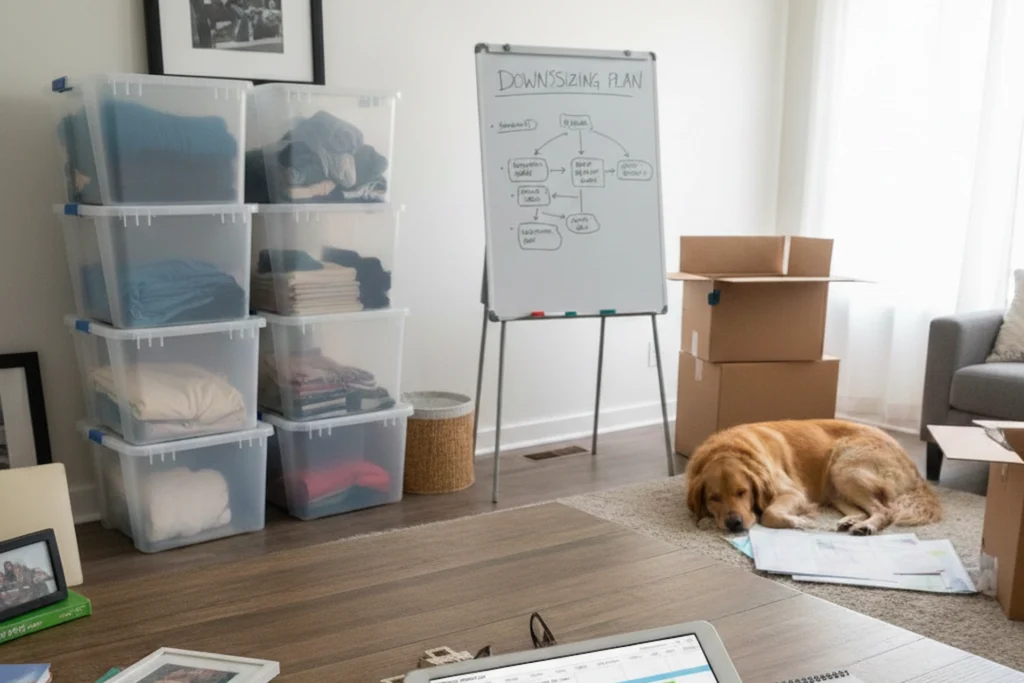
Question: How Do You Create a Downsizing Timeline? Answer: To create a downsizing timeline, start 3-6 months in advance by sorting possessions and decluttering. Next, prepare and list your property. Concurrently, search for your new home. Finally, schedule packers and movers, and manage legal paperwork with your lawyer for a smooth closing on both properties. […]

How Do You Choose the Right Neighborhood for Downsizing?
Question: How Do You Choose the Right Neighborhood for Downsizing? Answer: To choose the right neighborhood for downsizing, prioritize your future lifestyle by seeking walkability to essential services like healthcare and groceries. Consider access to public transit, lower property taxes, and a community that aligns with your social needs. Look for low-maintenance living options like […]

Should You Sell Your Home Before Downsizing to a Smaller One?
Question: Should You Sell Your Home Before Downsizing to a Smaller One? Answer: Selling your home before downsizing to a smaller one is often the most financially prudent strategy. Knowing your exact budget avoids bridge financing and lets you make a strong, non-conditional offer, which is a significant advantage in a competitive real estate market. […]

Is Downsizing to a Condo Cheaper Than a Townhouse?
Question: Is Downsizing to a Condo Cheaper Than a Townhouse? Answer: Downsizing to a condo can be cheaper than a townhouse. While condos often have a lower purchase price, their monthly maintenance fees can be substantial. A freehold townhouse has no monthly fees, but you are solely responsible for all maintenance and repair costs, which […]

How Much Can You Save on Utilities by Downsizing?
Question: How Much Can You Save on Utilities by Downsizing? Answer: You could save 20-40% or more on monthly utility bills by downsizing. A smaller home requires less energy for heating, hydro, and cooling, and uses less water. Actual savings depend on the size reduction and the home’s energy efficiency, offering a significant financial benefit […]

How Does Downsizing Impact Your Retirement Savings?
Question: How Does Downsizing Impact Your Retirement Savings? Answer: Downsizing impacts your retirement savings by unlocking tax-free capital from your principal residence. After buying a smaller home, the net profit can be invested to significantly boost your retirement fund, while lower property taxes and utility bills improve your monthly cash flow. How Downsizing Can Affect […]
How Do Property Taxes Change When You Downsize?
Question: How Do Property Taxes Change When You Downsize? Answer: Property taxes typically decrease when you downsize. Your bill is based on the home’s assessed value and the local municipal tax rate. A smaller, less expensive property usually has a lower assessed value, resulting in a smaller tax bill. The new municipality’s tax rate is […]

Why Is Proximity to Private Schools a Luxury Driver?
Question: Why Is Proximity to Private Schools a Luxury Driver? Answer: Proximity to private schools can be a luxury driver because it offers unparalleled convenience to affluent families seeking elite education. This demand from high-income buyers enhances a neighbourhood’s prestige and property values, making proximity to these institutions a hallmark of a luxury home. How […]

What Is the Importance of a Home Inspection for Luxury Estates?
Question: What Is the Importance of a Home Inspection for Luxury Estates? Answer: A home inspection for luxury estates safeguards a multi-million-dollar investment by uncovering costly, hidden defects in complex systems like smart tech, custom HVAC, and pools. This specialized evaluation provides crucial negotiating leverage and protects buyers from substantial, unforeseen repair costs. Why a […]

How Do You Manage Security During a Luxury Home Showing?
Question: How Do You Manage Security During a Luxury Home Showing? Answer: To manage security, start by pre-qualifying all potential buyers and scheduling private, appointment-only viewings. Sellers should be advised to secure valuables, and the agent should personally escort all visitors throughout the property, never leaving them unattended, to ensure the home’s complete safety and […]
What Are the Tax Implications of Buying a Luxury Home?
Question: What Are the Tax Implications of Buying a Luxury Home? Answer: The main tax implication of buying a luxury home includes a higher Land Transfer Tax (LTT), as luxury properties trigger higher tax brackets. Some cities also charge an additional municipal LTT. HST may be applicable if the home is a new construction. The […]

How Do Waterfront Properties Differ From Inland Luxury Estates?
Question: How Do Waterfront Properties Differ From Inland Luxury Estates? Answer: Waterfront properties differ from inland luxury estates in that they feature direct water access and premium views but also face specific shoreline regulations from conservation authorities, higher insurance costs, and increased maintenance. Inland luxury estates often provide more private acreage and architectural freedom for […]

Why Is Privacy the Ultimate Luxury in Modern Real Estate?
Question: Why Is Privacy the Ultimate Luxury in Modern Real Estate? Answer: Privacy is the ultimate luxury in modern real estate because in an age of increasing urban density and digital exposure, a truly private space offers a rare sanctuary. It provides unparalleled security, tranquility, and control, making it the most coveted asset for today’s […]

What Role Does Sustainability Play in Luxury Home Design?
Question: What Role Does Sustainability Play in Luxury Home Design? Answer: Sustainability’s role is now a cornerstone of luxury home design, blending sophisticated aesthetics with environmental responsibility. It incorporates energy-efficient systems, renewable resources, and non-toxic materials to create homes that are not only beautiful and comfortable but also healthier and more valuable in the long […]

What Is a Pocket Listing In the Luxury Market?
Question: What Is a Pocket Listing in the Luxury Market? Answer: A pocket listing, or exclusive listing, is a property sold privately without being advertised on the public MLS. In luxury real estate, this offers sellers enhanced privacy and exclusivity, targeting only pre-vetted buyers through an agent’s private network. The Pocket Listing in Luxury Real […]

How Does Wellness Architecture Impact Luxury Home Value?
Question: How Does Wellness Architecture Impact Luxury Home Value? Answer: Wellness architecture significantly boosts value by meeting the demand for health-centric living. Features like purified air systems, biophilic design, and dedicated wellness spaces transform a property into a private sanctuary, commanding a premium price from buyers prioritizing a healthy lifestyle in today’s competitive luxury market. […]

How Do Outdoor Living Spaces Influence Luxury Property Prices?
Question: How Do Outdoor Living Spaces Influence Luxury Property Prices? Answer: Outdoor living spaces influence luxury property prices by expanding a home’s functional living area, significantly boosting its value. Features like outdoor kitchens, pools, and sophisticated landscaping create a highly desirable lifestyle, justifying a premium price and setting a property apart in the competitive luxury […]

What Are the Most Sought-After Luxury Home Amenities Today?
Question: What Are the Most Sought-After Luxury Home Amenities Today? Answer: Luxury home amenities buyers prioritize include wellness and tech, home gyms, spa-like ensuites, and full smart-home integration. Chef’s kitchens, sophisticated outdoor living spaces for year-round enjoyment, EV charging stations, and dedicated home offices are also in high demand across the market. Defining Today’s Most […]

How Does Luxury Real Estate Hedge Against Inflation?
Question: How Does Luxury Real Estate Hedge Against Inflation? Answer: Luxury real estate is a tangible asset with inherent scarcity. As inflation rises, so do property values and potential rental income. This preserves capital and purchasing power, as the asset’s value appreciation often outpaces the rate of inflation, offering a stable store of wealth. Protecting […]

Should You Buy a Luxury Condo or a Detached Estate?
Question: Should You Buy a Luxury Condo or a Detached Estate? Answer: Whether you should buy a luxury condo or a detached estate depends on your priorities. Choose a condo for a low-maintenance lifestyle with premium amenities. Opt for a detached estate if you value privacy, a private yard, and complete control over your property […]
How Do Interest Rates Affect High-End Property Sales?
Question: How Do Interest Rates Affect High-End Property Sales? Answer: Interest rate hikes increase mortgage carrying costs, impacting even high-end property sales. This typically dampens demand for luxury properties, leading to fewer sales, longer listing periods, and a slowdown in price appreciation as overall market confidence wanes. How Interest Rate Changes Influence High-End Real Estate […]

Are Luxury Vacation Rentals a Viable Investment Strategy?
Question: Are Luxury Vacation Rentals a Viable Investment Strategy? Answer: Yes, luxury vacation rentals can be a viable investment strategy. They offer high rental income and appreciation but demand significant capital, premium maintenance, and expert marketing. Success hinges on prime location, unique amenities, and navigating strict municipal short-term rental regulations to ensure profitability and compliance. […]

What Makes a Retirement Spot Walkable?
Question: What Makes a Retirement Spot Walkable? Answer: A walkable retirement spot offers safe, accessible sidewalks and close proximity to daily necessities. This includes grocery stores, pharmacies, healthcare services, and community centres, all within a comfortable walking distance, fostering an active and independent lifestyle without relying on a vehicle. The Ideal Walkable Community for Retirement […]

Rightsizing vs Downsizing for Retirement?
Question: Rightsizing vs Downsizing for Retirement? Answer: Downsizing focuses only on moving to a smaller property, usually to cut costs. Rightsizing is about finding a home that perfectly suits your new lifestyle, considering accessibility and amenities—which may not necessarily mean smaller, just a better fit for your future. Choosing Your Next Home: Rightsizing or Downsizing […]

Leaving the Family Home for Retirement?
Question: Leaving the Family Home for Retirement? Answer: Leaving the family home for retirement is a popular strategy that can unlock significant home equity, tax-free due to the Principal Residence Exemption, to fund your next chapter. It allows for downsizing to reduce maintenance and expenses, suiting a new lifestyle. Careful financial and real estate planning […]

Renovate or Move for Retirement?
Question: Renovate or Move for Retirement? Answer: Whether to renovate or move for retirement depends on your finances and future needs. Renovating for accessibility may qualify for tax credits, allowing you to age in place. Moving can reduce maintenance, but factor in costs like Land Transfer Tax and agent fees before making your final decision. […]